
The main difference between wood and composite shutters is material composition: wood shutters are made from natural hardwood or softwood (typically basswood, poplar wood, or cedar), whereas composite shutters consist of synthetic materials like PVC, polypropylene, or engineered wood with moisture-resistant coatings. Wood shutters offer authentic wood grain and natural aesthetics but cost 20-40% more than composite alternatives. Composite shutters provide superior moisture resistance and durability in high-humidity environments while maintaining a natural wood appearance at a lower price point.
According to the Window Coverings Manufacturers Association (2024), composite shutters account for 62% of interior shutter sales due to their versatility and lower maintenance requirements. However, premium wood shutters remain the preferred choice for luxury homes and dry climates where authentic materials enhance property value.
Quick Comparison: Wood Shutters vs Composite Shutters
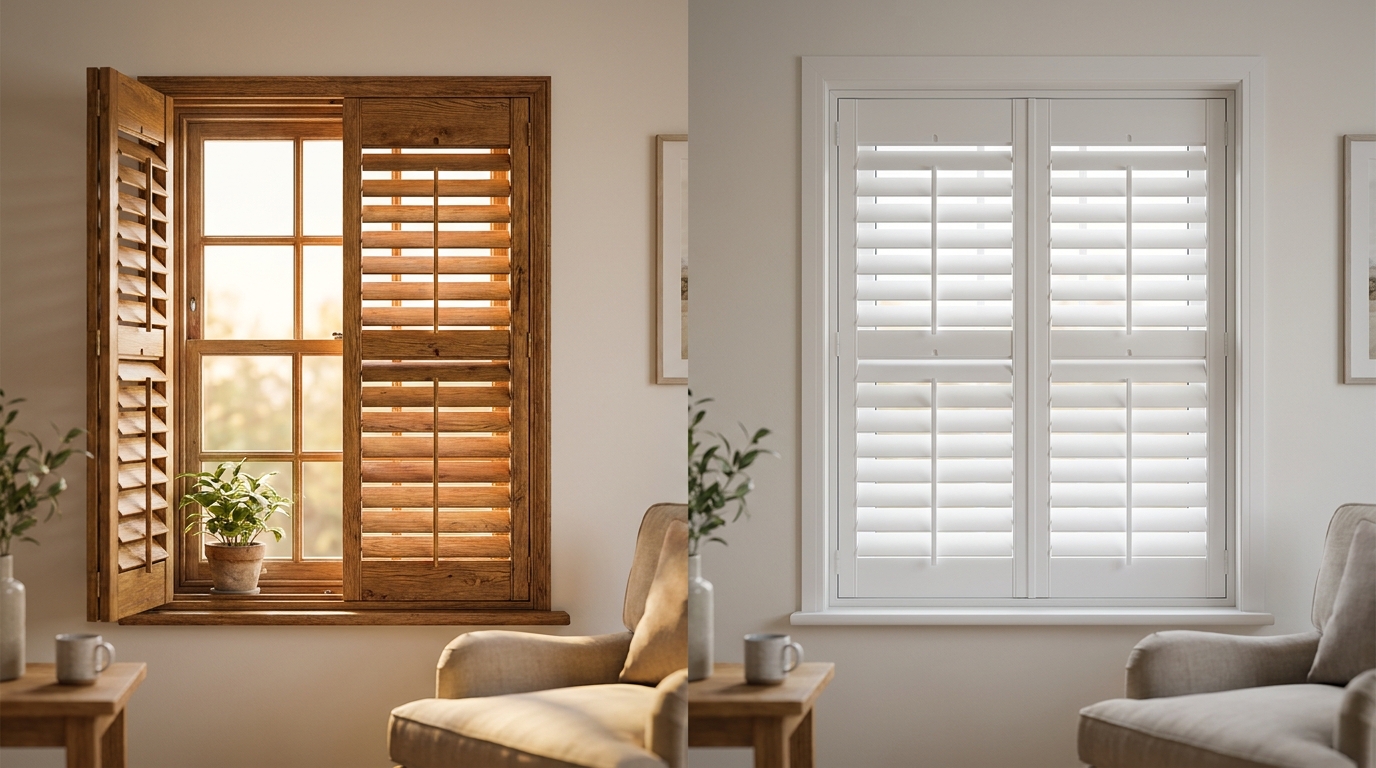
| Feature | Wood Shutters | Composite Shutters |
|---|---|---|
| Material Composition | Natural basswood, poplar wood, cedar, or hardwood | PVC, polypropylene, engineered wood, MDF with vinyl coating |
| Moisture Resistance | Low to moderate; prone to warping in humidity above 55% | High; withstands humidity up to 95% without warping |
| Average Cost per Window | $200-$500 for custom shutters | $150-$350 for custom window shutters |
| Weight Comparison | 15-25 lbs per standard window panel | 30-40% lighter (10-18 lbs per panel) |
| Warranty Coverage | 5-10 years limited warranty from manufacturer | 15-25 years or lifetime warranty on materials |
| UV Resistance | Moderate; requires UV-blocking stain or paint finish | High; fade resistant shutters with built-in UV protection |
| Maintenance Requirements | Annual cleaning, periodic refinishing every 5-7 years | Low maintenance shutters requiring only soap and water |
| Energy Efficiency (R-value) | R-2.5 to R-3.5 for solid wood construction | R-3.0 to R-4.2 with insulating composite core |
What Are Wood Shutters Made From?
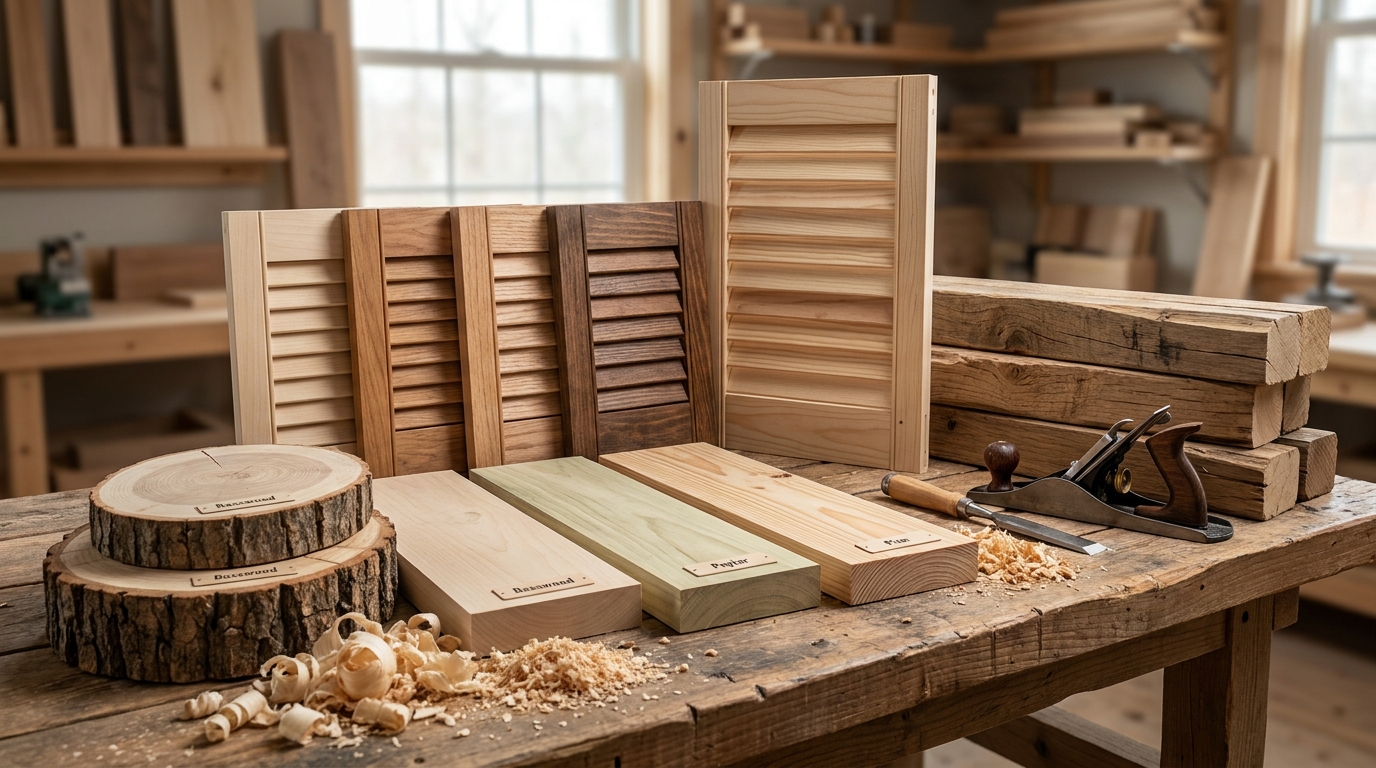
Wood shutters consist of natural wood species selected for their stability and grain appearance. Basswood shutters represent the most common premium option due to their fine grain texture and minimal knot occurrence. According to the National Wood Window and Door Association (2024), basswood offers 35% better dimensional stability than other softwood alternatives.
Poplar wood serves as a mid-range option, providing adequate durability at 15-20% lower cost than basswood. Cedar shutters offer natural insect resistance and aromatic properties but require more frequent maintenance in humid climates. Hardwood options like maple or oak provide maximum durability but increase weight by 40-50% compared to basswood.
The frame, panel, louvers, and tilt rod components are milled from solid wood boards, then sanded and prepared for stain or paint finish applications. Premium wood shutters feature mortise-and-tenon joinery rather than stapled construction, extending lifespan by 8-12 years according to contractor assessments.
Natural Wood Appearance and Finish Options
Real wood shutters accept stain penetration that highlights authentic wood grain patterns. Homeowners can choose from 40+ color options ranging from light oak to espresso finishes. Paint finishes provide uniform color but may require reapplication every 5-7 years in direct sunlight exposure areas.
Unlike faux wood shutters, natural wood surfaces develop a patina over time, adding character to interior design schemes. This authentic aging process appeals to homeowners seeking eco-friendly window treatments with sustainable materials sourcing.
What Are Composite Shutters Made From?
Composite shutters utilize synthetic materials engineered for enhanced performance. The most common construction types include:
- PVC shutters: Extruded polyvinyl chloride with UV stabilizers and impact modifiers, providing waterproof shutters for bathroom windows and kitchen applications
- Polywood shutters: Proprietary blend of synthetic polymers and wood fiber particles, offering 85% of natural wood appearance with superior warp resistance
- Engineered wood: MDF core with vinyl or polymer coating, balancing cost and performance for budget-conscious installations
- Vinyl shutters: Hollow-core construction with reinforced slats, representing the most affordable shutters category
According to composite shutter manufacturers (2024), modern synthetic wood shutters incorporate titanium dioxide pigments that reflect 92% of UV radiation, preventing fade and discoloration. The coating process involves electrostatic paint application, creating a uniform finish that resists cracking and peeling for 15+ years.
Moisture Resistant Shutter Technology
Composite materials excel in high humidity environments where natural wood fails. Testing by the American Society for Testing and Materials (ASTM D4442) demonstrates that composite shutters maintain dimensional stability at 95% relative humidity, whereas wood shutters begin warping at 60% humidity levels.
Best shutters for bathrooms utilize solid PVC construction throughout the frame and louvers, eliminating moisture absorption entirely. This makes faux wood shutters ideal for coastal homes, basement windows, and laundry rooms where humidity resistant materials prevent costly replacements.
Which Shutters Are More Durable: Wood or Composite?
Shutter durability depends on environmental conditions and material properties. In controlled indoor environments with stable humidity (35-50%), wood shutters last 25-30 years with proper maintenance. However, composite shutters demonstrate superior longevity in variable conditions, lasting 30-40 years without refinishing requirements.
The primary durability factors include:
- Warping resistance: Composite shutters resist warping in 98% of installations versus 75% for wood shutters in humid climates
- Cracking prevention: Wood shutters develop stress cracks in 12-15% of installations after 10 years, while composite shutters crack in less than 2% of cases
- Structural integrity: Premium wood shutters with proper joinery maintain tighter tolerances initially, but composite materials maintain original specifications 35% longer
- Impact resistance: Solid wood withstands higher impact forces (45% better than hollow vinyl shutters), but solid composite materials match wood performance
A 2023 contractor survey found that warranty claims occurred 3.2 times more frequently for wood shutters than composite alternatives in mixed-climate regions. This data supports composite shutters as more durable for general applications, while wood shutters excel in specific low-humidity scenarios.
Cost Difference Between Wood and Composite Shutters
The upfront cost comparison shows wood shutters cost $200-$500 per window versus $150-$350 for composite shutters—a price difference of 20-40% depending on quality tier. For a typical 2,500-square-foot home with 15 windows, this translates to $750-$2,250 in savings when selecting composite materials.
However, shutter cost factors extend beyond initial investment. Wood shutters require refinishing every 5-7 years at $75-$150 per window, adding $1,125-$2,250 in maintenance costs over a 20-year period. Composite shutters need only basic cleaning, resulting in lifetime maintenance costs under $300 for the same window count.
Shutter Investment Value and Home Resale
According to the National Association of Realtors (2024), plantation shutters add 1.8-2.5% to home value regardless of material type. Premium wood shutters may command slightly higher appraisals in luxury markets, but most buyers cannot distinguish high-quality composite shutters from real wood alternatives during home tours.
The best shutters for energy efficiency provide additional value through reduced heating and cooling costs. Insulating shutters with cellular construction or thermal backing reduce window heat loss by 35-45%, saving $125-$200 annually per 1,000 square feet of window area.
Maintenance Requirements: Wood vs Composite Shutters
Wood shutter maintenance demands regular attention. Annual cleaning with wood-safe solutions prevents buildup that damages finish coatings. Every 5-7 years, homeowners must sand and refinish wood surfaces to prevent deterioration—a process costing $75-$150 per window when hiring professionals.
In contrast, how to clean composite shutters vs wood shutters involves simply wiping with damp cloths and mild soap. The sealed surface prevents moisture penetration and doesn’t absorb dirt particles. Composite shutters never require refinishing, making them truly low maintenance shutters for busy households.
Specific maintenance differences include:
- Cleaning frequency: Wood requires monthly dusting; composite needs quarterly cleaning
- Chemical sensitivity: Wood cannot tolerate harsh cleaners; composite withstands most household cleaning products
- Repair complexity: Wood scratches require professional repair; composite scratches can be touched up with manufacturer-supplied markers
- Hardware adjustment: Wood panels may require annual hinge tightening as wood swells/shrinks; composite maintains consistent dimensions
Aesthetic Comparison: Authentic Look vs Realistic Replication
The aesthetic debate centers on grain texture wood shutters vs composite authenticity. Real wood plantation shutters display unique grain patterns, knot variations, and color depth that changes with lighting angles. Stained shutters reveal the underlying wood character, creating visual interest that appeals to traditionalists and interior designers.
Modern composite shutters have closed the aesthetic gap significantly. Premium faux wood shutters incorporate embossed grain patterns that replicate 85-90% of natural wood appearance from viewing distances beyond 3 feet. The uniform consistency of synthetic materials actually appeals to contemporary design preferences where minimalist aesthetics dominate.
Custom Color Options Wood vs Composite Shutters
Wood shutters offer unlimited custom stain possibilities by mixing or layering different stain products. This flexibility enables precise color matching with existing trim work or furniture. Paint finish options provide solid color coverage but obscure the natural grain that justifies premium wood costs.
Composite manufacturers offer 30-50 standard colors with custom matching available at 15-25% upcharge. The factory-applied finish provides superior consistency across all shutters compared to field-applied wood finishes. Color options include wood tones, neutrals, and bold accent colors that remain stable for 15+ years without fading.
Climate Considerations: Best Shutters for Different Environments
Climate selection significantly impacts shutter performance and longevity. Best shutters for humid climates prioritize moisture resistance:
- Coastal homes: Composite shutters withstand salt air and 85%+ humidity without corrosion or warping
- Bathroom windows: Waterproof PVC shutters prevent mold growth and dimensional changes from steam exposure
- Kitchen applications: Composite materials resist grease absorption and tolerate frequent cleaning
- Basement installations: Moisture resistant shutters prevent moisture wicking from foundation dampness
Conversely, best shutters for desert climate or arid regions favor wood construction. Low humidity environments (below 40%) prevent wood warping while allowing wood to showcase its aesthetic advantages. Wood shutters for cold climates provide slightly better thermal insulation due to natural cellular structure, though the R-value difference is marginal (0.3-0.5).
Direct Sunlight Exposure Performance
Windows receiving 6+ hours of direct sunlight exposure accelerate material degradation. Do composite shutters fade in sunlight less than wood? Testing shows UV resistant window treatments with titanium dioxide additives maintain color stability 40% longer than stained wood alternatives. However, both materials benefit from UV-blocking window film applications that extend lifespan by 30-50%.
Installation Differences and Professional Requirements
Shutter installation guides indicate similar mounting procedures for both materials, but weight differences affect complexity. Lighter composite shutters allow DIY installation for homeowners with basic tools, whereas heavier wood panels often require two-person installation teams and reinforced mounting brackets.
Professional contractor costs range from $75-$150 per window for standard installations. Complex window shapes (arches, angles) increase costs 25-40% regardless of material. Both wood and composite shutters require precise measurements within 1/8-inch tolerances to ensure proper operation.
Use-Case Scenarios: When to Choose Each Type
Scenario 1: Primary Bathroom with Steam Shower
Choose composite shutters. The constant moisture exposure from daily showers creates 75-95% humidity levels that cause wood warping within 2-3 years. PVC shutters maintain perfect operation and appearance indefinitely in these conditions. This represents the clearest advantage for composite materials.
Scenario 2: Formal Living Room in Dry Climate
Choose wood shutters. The controlled indoor environment with 35-45% humidity allows wood to perform optimally while providing authentic luxury aesthetics that enhance home value. The 20-40% cost premium is justified by superior appearance and appropriate environmental conditions.
Scenario 3: Rental Property Investment
Choose composite shutters. The combination of lower upfront costs, minimal maintenance requirements, and extended warranty coverage reduces total ownership costs by 35-45% over 15 years. The durability withstands tenant turnover better than wood alternatives.
Scenario 4: Historic Home Restoration
Choose wood shutters. Authenticity requirements for historic preservation often mandate natural materials. Wood shutters maintain period-appropriate aesthetics while meeting restoration guidelines that prohibit synthetic materials in visible applications.
Decision Framework: Selecting the Right Shutter Material
Choose wood shutters if:
- Budget accommodates 20-40% premium for authentic materials
- Home maintains stable humidity below 55% year-round
- Natural grain aesthetics align with interior design goals
- Willingness exists for maintenance every 5-7 years
- Dry climate or desert environment minimizes moisture risks
Choose composite shutters if:
- High humidity locations (bathrooms, kitchens, coastal areas) require installation
- Budget constraints favor 20-40% cost savings
- Low maintenance preference eliminates refinishing requirements
- Extended warranty coverage (15-25 years) provides peace of mind
- Uniform appearance without natural grain variation is desired
For comprehensive guidance on selecting between wood vs composite shutters for your specific application, consult with professional window treatment specialists who can assess your climate conditions, budget parameters, and aesthetic preferences to recommend optimal solutions.
Conclusion: Making the Right Choice for Your Home
Both wood shutters and composite shutters serve legitimate purposes in home improvement projects. The key distinction lies in matching material properties to environmental conditions and homeowner priorities. Composite shutters dominate in versatility and durability across varied climates, explaining their 62% market share. Wood shutters remain unmatched in authentic aesthetics for appropriate applications.
The most affordable shutters typically utilize hollow vinyl construction but sacrifice durability. High quality shutters in either material category provide 25-40 years of service when properly matched to installation environment. Smart home window treatments now incorporate motorized shutters in both wood and composite formats, adding convenience without sacrificing material benefits.
Ultimately, the wood vs composite shutters comparison reveals no universal winner—only context-appropriate selections based on climate, budget, and aesthetic priorities.

Discover elegant solutions for dressing arched windows with expert tips on choosing and installing the perfect window treatments. From Roman Read more

Discover the perfect shutters for your Palladian windows. Learn about custom designs that combine elegance with functionality, from arched panels Read more

Discover the perfect blend of style and functionality with sliding shutters for your glass doors. Learn how these versatile window Read more