
Outcome: Streak-free, dust-free plantation shutters in 15–30 minutes weekly, or 1–2 hours for a full deep clean. Skill level: Beginner. No professional tools required.
Plantation shutters are wide-louvered window treatments made from wood, vinyl, composite, or PVC. Proper shutter maintenance prevents warping, mold, and hinge failure, extending shutter longevity by years, according to home maintenance experts (2024).
Before You Begin: Prerequisites
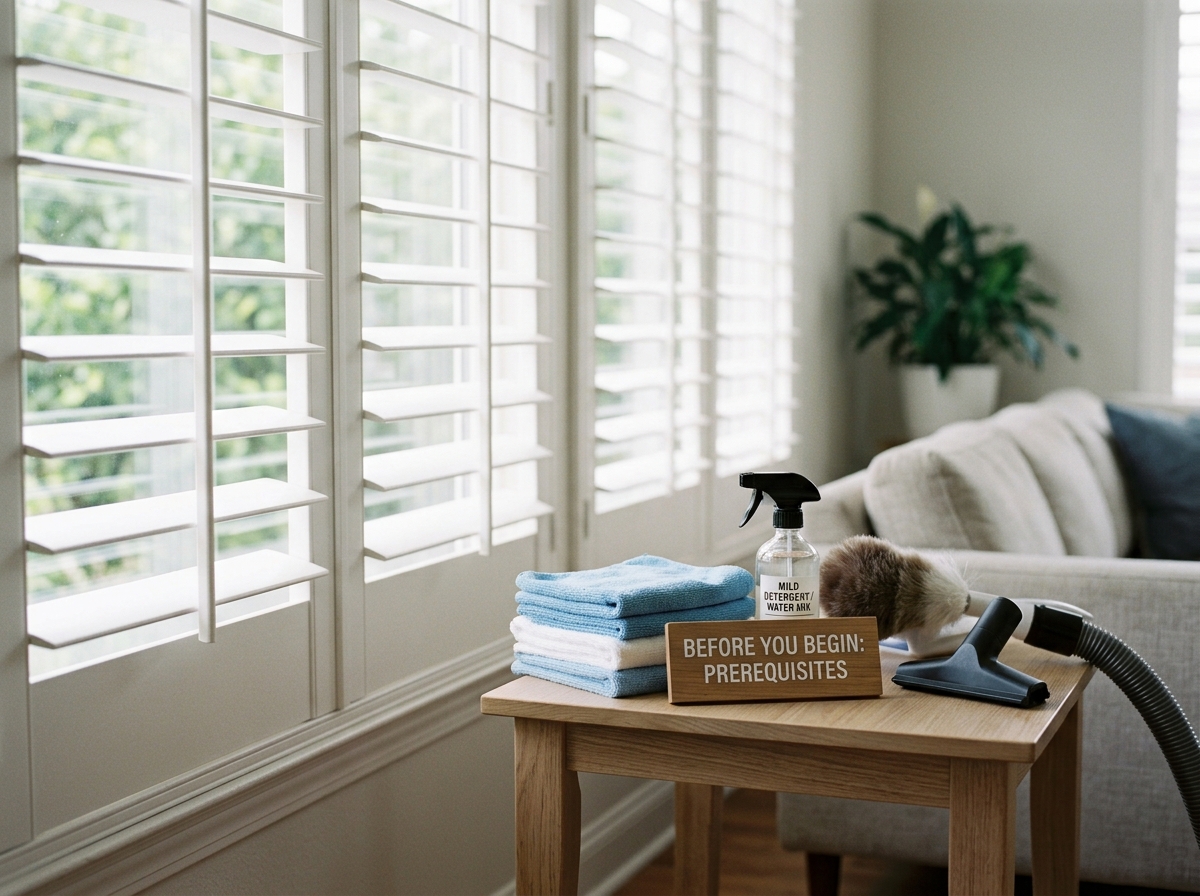
- Time needed: 15 minutes (weekly dusting) to 2 hours (deep clean)
- Skill level: Beginner — no carpentry experience needed
- Tools: Microfiber cloth, feather duster, dust brush, vacuum cleaner with brush attachment, compressed air canister, screwdriver
- Cleaning solutions: Mild soap solution, warm water, ammonia-free cleaner, silicone lubricant, wood polish or furniture wax (for wood shutters only)
- Safety note: Avoid ammonia-based products on wood shutters; they strip finish and cause discoloration
Step 1: Dust Shutters Weekly to Prevent Buildup
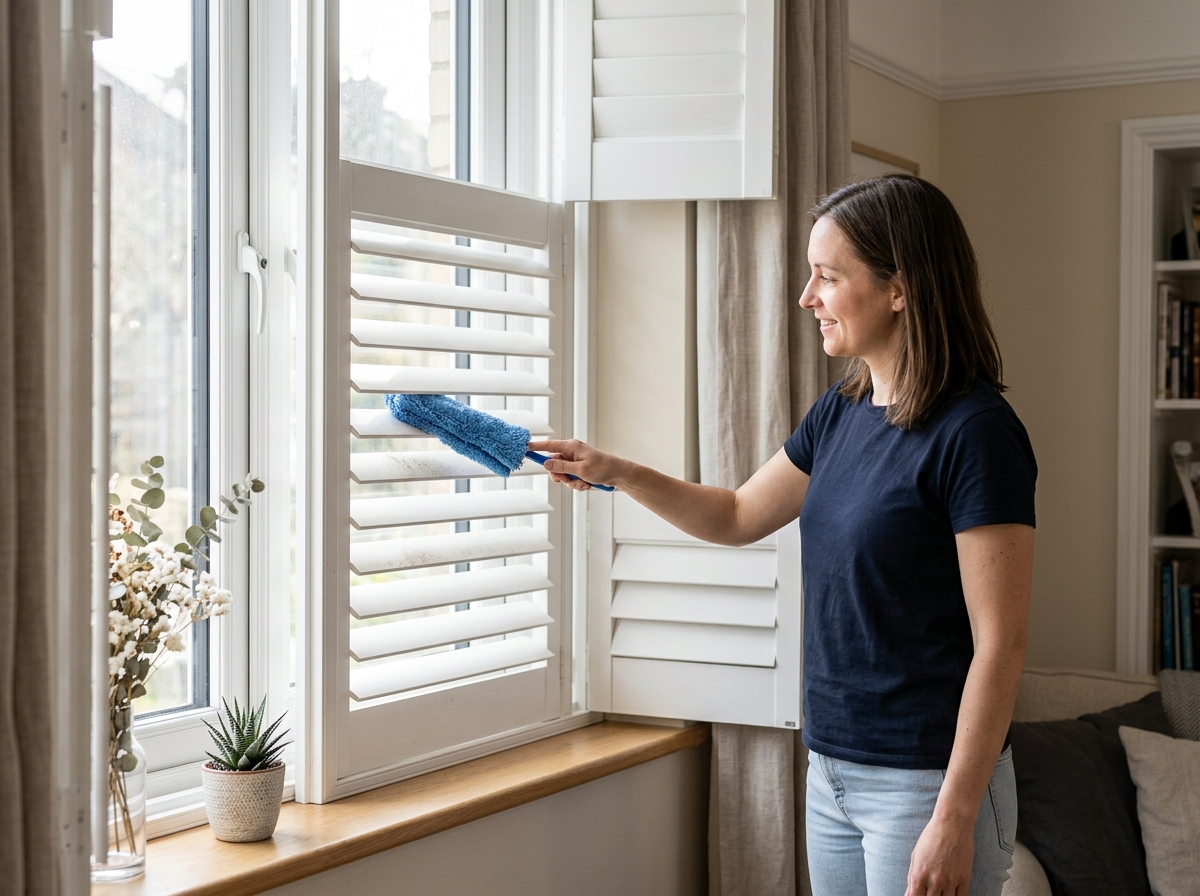
Household dust prevention starts with a consistent shutter dusting technique. This is the fastest way to remove dust from blinds and louvers before it hardens into grime.
Sub-Steps:
- Close louvers fully using the shutter tilt bar to create a flat dusting surface.
- Run a feather duster or dust brush horizontally across each louver.
- Wipe with a dry microfiber cloth to catch remaining particles.
- Open louvers and repeat on the reverse side.
Frequency: This shutter cleaning schedule should occur weekly for interior windows in high-traffic rooms.
Step 2: Vacuum Louvers for Deeper Dust Removal
Monthly vacuuming addresses dust trapped in hinges and grooves that dusting alone misses.
Sub-Steps:
- Attach a soft-brush nozzle to your vacuum cleaner.
- Vacuum along each louver edge and the shutter hinges.
- Use compressed air to blast dust from tight corners and the tilt bar mechanism.
- Finish with a microfiber cloth wipe-down.
Step 3: Deep Clean Shutters by Material Type
The best way to clean shutters depends on the material. Wood shutters, vinyl shutters, composite shutters, and PVC shutters each require different moisture tolerances.
Cleaning Wood Shutters
To avoid warping in wood shutters, use minimal moisture. Learn more about proper cleaning plantation shutters techniques tailored to wood before attempting a full deep clean.
- Mix a mild soap solution with warm water — never soak the cloth.
- Wring the microfiber cloth until barely damp.
- Wipe louvers in the direction of the wood grain.
- Dry immediately with a second cloth to prevent moisture absorption.
Cleaning Vinyl and PVC Shutters
Tips for maintaining vinyl plantation shutters allow more moisture tolerance than wood.
- Combine warm water and mild soap solution in a spray bottle.
- Spray directly on louvers and wipe with microfiber cloth.
- Rinse with a barely damp cloth to avoid streaks.
Cleaning Composite Shutters
Composite shutters tolerate soap and water like vinyl but should avoid abrasive scrubbing pads that scratch the finish.
How to Clean Plantation Shutters With Vinegar
For a natural cleaning solution for shutters, mix one part white vinegar with three parts warm water. This works on vinyl and composite shutters but is not recommended for unsealed wood shutters, as acidity can damage the finish.
Step 4: Lubricate Shutter Hinges for Smooth Operation
Shutter hinge lubrication prevents squeaking and hardware degradation — a critical step in interior shutter upkeep.
Sub-Steps:
- Use a screwdriver to check hinge screws are tight before lubricating.
- Apply a small amount of silicone lubricant directly to hinge joints.
- Move louvers back and forth to distribute lubricant evenly.
- Wipe excess lubricant with a microfiber cloth.
Frequency: Lubricate hinges every 6 months for optimal shutter longevity.
Step 5: Prevent Mold and Mildew on Bathroom Shutters
How to clean plantation shutters in bathroom settings requires extra attention due to humidity exposure.
- Inspect louvers monthly for dark spots indicating mold and mildew growth.
- Apply a mold and mildew remover formulated for interior use.
- Use an ammonia-free cleaner on vinyl or PVC shutters near showers.
- Run a bathroom exhaust fan after showers to reduce moisture buildup.
Preventing mold on shutters is easier than restoration, so address humidity control immediately.
Step 6: Polish and Protect Wood Shutters
To keep plantation shutters looking new, finish deep cleaning with a protective layer.
- Apply wood polish or furniture wax sparingly to wood shutters only.
- Buff with a dry microfiber cloth in circular motions.
- Skip this step entirely for vinyl, composite, or PVC shutters — polish causes residue buildup.
Shutter Cleaning Frequency Reference
| Task | Frequency | Time Required |
|---|---|---|
| Dusting (feather duster/microfiber cloth) | Weekly | 15 minutes |
| Vacuuming louvers | Monthly | 20 minutes |
| Deep cleaning (soap solution) | Every 3 months | 1–2 hours |
| Hinge lubrication | Every 6 months | 10 minutes |
| Mold inspection (bathrooms) | Monthly | 5 minutes |
Troubleshooting Common Shutter Issues
- If streaks appear after cleaning → use a drier microfiber cloth and reduce soap solution concentration.
- If wood shutters feel warped → stop using wet cloths immediately and switch to dry dusting only until moisture evaporates.
- If hinges squeak after lubrication → reapply silicone lubricant and check screws with a screwdriver for looseness.
- If mold returns within weeks → improve bathroom ventilation and switch to an ammonia-free cleaner with stronger antimicrobial action.
- If dust returns quickly → increase vacuuming frequency and check for HVAC filter issues contributing to household dust.
Next Steps: Long-Term Shutter Care
Once your shutter cleaning guide routine is established, consider these upgrades for shutter restoration and longevity:
- Schedule quarterly deep cleans alongside other window treatments and blinds.
- Compare cleaning products for shutters annually — review ammonia-free formulas for safety.
- Inspect for early warping or hinge wear every season change.
- Document your DIY shutter cleaning schedule to maintain consistency across all interior windows.

If you're wondering what window treatments add value to your home, plantation shutters are one of the best and most Read more

Plantation shutters are a popular window treatment, and it's no wonder. They're beautiful and provide many benefits. Keep your home Read more

Some things were made for each other: peanut butter and jelly, chocolate and caramel, plantation shutters and curtains. The trick Read more