
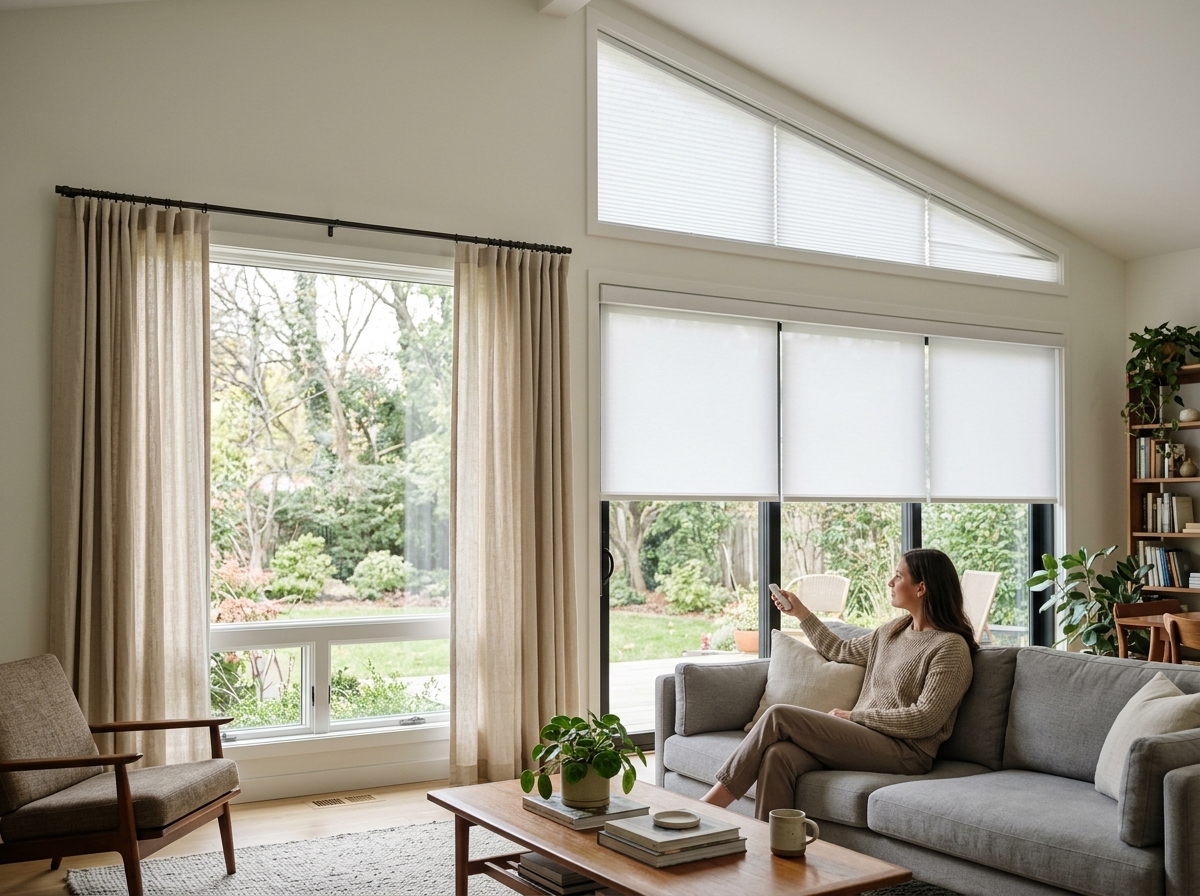
The best window treatments for large or odd-shaped windows are custom-fit solutions—such as plantation shutters, motorized blinds, and made-to-measure drapery—engineered to match non-standard window sizes while balancing light control, privacy, and insulation. Unlike off-the-shelf options, these specialty shaped window solutions account for unique dimensions like arches, angles, and extreme height, ensuring both function and aesthetics.
Why Custom Window Coverings Matter for Oversized and Unusual Windows
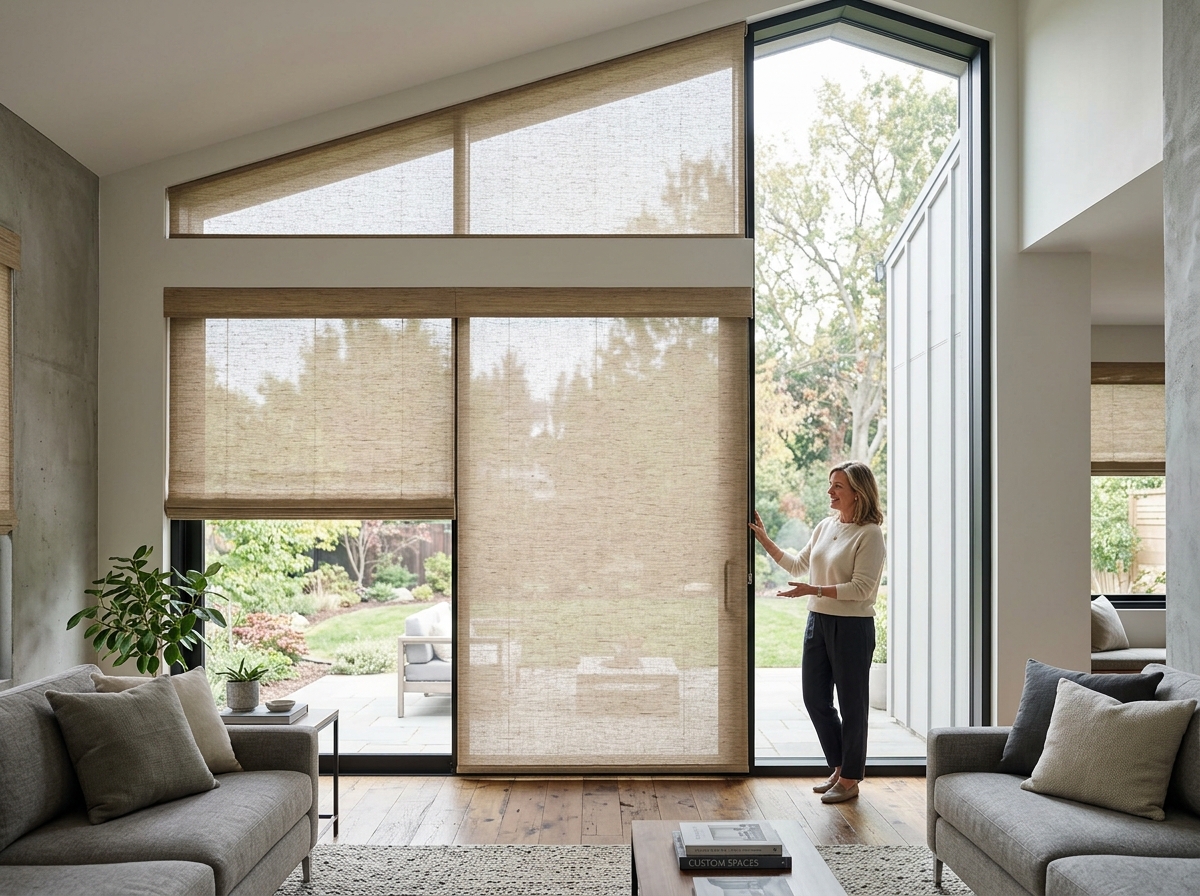
Large window coverings do more than block sunlight. According to the U.S. Department of Energy (2023), uncovered or poorly fitted windows account for up to 30% of residential heating and cooling loss. Odd-shaped window solutions—for bay windows, arched windows, skylights, and clerestory window treatments—prevent energy waste while preserving architectural character.
Standard blinds or curtains rarely fit these spaces. Custom fit blinds and custom drapery solve gaps that cause light leakage, privacy issues, and heat transfer.
Key Characteristics of Effective Treatments for Large or Specialty Shaped Windows
- Precise measurement: Custom shade fabrication requires exact width, height, and angle measurements—especially for angled window blinds.
- Material durability: Wood blinds, faux wood blinds, and cellular shades resist warping under prolonged sun exposure.
- Light control flexibility: Light filtering shades and room darkening shades offer adjustable natural light control.
- Energy efficiency: Insulated window treatments like cellular shades reduce heat transfer by up to 40% (U.S. Department of Energy, 2023).
- Motorization compatibility: Motorized window shades integrate with smart home automation for hard-to-reach high window coverings.
How to Choose Window Treatments by Window Shape and Size
1. Bay Windows
Bay window blinds should be installed on individual tracks per pane. Plantation shutters or roller shades allow independent control of each angle, avoiding gaps common in single-panel curtains.
2. Arched Windows
Arched window curtains rarely conform well. Custom shutters for arched or angled windows, cut to follow the curve, remain the top choice among interior designers for permanent coverage.
3. Skylights and Sloped Windows
Window coverings for skylights and sloped windows require motorized shades for hard-to-reach windows. Cellular shades with remote operation are standard for sunroom window coverings and clerestory window treatments.
4. Picture and Floor-to-Ceiling Windows
For the best window treatments for large picture windows, layered curtain ideas for large windows combine sheer curtains for daytime privacy with blackout curtains for evening light control. Floor to ceiling curtains typically use a sliding panel track system for smooth operation.
5. Corner and Angled Windows
Corner window treatments benefit from tension rods or continuous curtain rods that wrap the angle. This creates a cohesive, custom window treatment appearance without visible seams.
6. Extra-Wide Windows
For how to hang curtains on extra wide windows, use reinforced drapery hardware and multiple support brackets. Wide-span track systems for curtains prevent sagging over time.
For homeowners seeking a permanent, energy-efficient option, shutters for large windows provide structural durability that fabric treatments cannot match.
Common Misconceptions About Large or Odd-Shaped Window Treatments
Myth: Custom treatments are too expensive for most budgets.
Reality: Affordable window coverings for big windows exist, including faux wood blinds and roller shades, which cost 30–50% less than motorized alternatives while still fitting non-standard window sizes precisely.
Myth: DIY solutions cannot look professional.
Reality: DIY window treatments for oddly shaped windows—using tension rods or valances—can achieve a tailored look when paired with correct fabric selection for curtains.
Myth: One treatment type suits every large window.
Reality: Window styling tips vary by shape. A picture window may need drapery panels, while a skylight requires motorized cellular shades.
Custom Window Treatments vs. Standard Off-the-Shelf Blinds
Custom window treatments are built to a window’s exact measurements, unlike standard blinds sold in fixed sizes. This distinction matters most for specialty shaped windows.
| Feature | Custom Window Treatments | Standard Off-the-Shelf Blinds |
|---|---|---|
| Fit accuracy | Exact match, including angles | Limited to standard rectangles |
| Material options | Wood, faux wood, motorized fabric | Basic vinyl or aluminum |
| Cost | Higher upfront, better longevity | Lower upfront, shorter lifespan |
| Best use case | Bay, arched, or oversized windows | Standard rectangular windows |
Companies like Hunter Douglas, Budget Blinds, and The Shade Store specialize in custom shade fabrication, offering measurement services for non-standard window sizes. Many homeowners also consult an interior designer to align window covering solutions with broader home decor solutions.
Practical Applications: Matching Treatments to Room Function
- Living rooms: Layered treatments combining sheer fabric panels with drapery panels for both light control and privacy.
- Bedrooms: Room darkening shades or blackout curtains for sleep quality.
- Sunrooms: Light filtering shades that reduce glare while maintaining natural light control.
- Home offices: Motorized blinds with smart home automation for scheduled light adjustment.
- Kitchens: Faux wood blinds resist humidity better than fabric options.
Frequently Asked Questions
What is the best way to cover a large living room window?
Layered treatments—sheer curtains beneath drapery panels—offer flexible natural light control and privacy for large living room windows.
How do I measure for custom curtains on oversized windows?
Window measurement tips recommend measuring width at three points and height from rod placement to floor, adding 4–6 inches on each side for full coverage.
As of 2025, motorized and app-controlled treatments continue to dominate interior design trends for large and specialty shaped windows, driven by rising demand for energy-efficient shades for large windows.

If you're wondering what window treatments add value to your home, plantation shutters are one of the best and most Read more

Plantation shutters are a popular window treatment, and it's no wonder. They're beautiful and provide many benefits. Keep your home Read more

Some things were made for each other: peanut butter and jelly, chocolate and caramel, plantation shutters and curtains. The trick Read more